
Santorini museums are small, cheap and almost entirely overlooked, which is a shame because two of them hold objects that would headline a national collection anywhere else. The frescoes lifted from Akrotiri are among the finest surviving wall paintings of the Bronze Age Aegean, and they sit in a modest building in Fira that most visitors walk past on their way to a sunset. This page covers all of them honestly, including the ones we would skip. Our Santorini Tours take in the sites and the collections that explain them.
The most useful thing on this page is the order. See the Museum of Prehistoric Thera before you walk through Akrotiri, not after, and an hour that looks like an obligation turns the site into the best thing you do on the island.
The Short Answer
Museum of Prehistoric Thera, in Fira. The frescoes and finds from Akrotiri. If you visit one of the Santorini museums, make it this one.
Then Akrotiri itself, which is the town those objects came out of.
The Wine Museum at Vothonas if the weather turns, because it is underground, odd and includes a tasting.
Art Space in Exo Gonia if you like contemporary art in extraordinary rooms.
Skip the smaller collections unless you have a week or a specific interest.
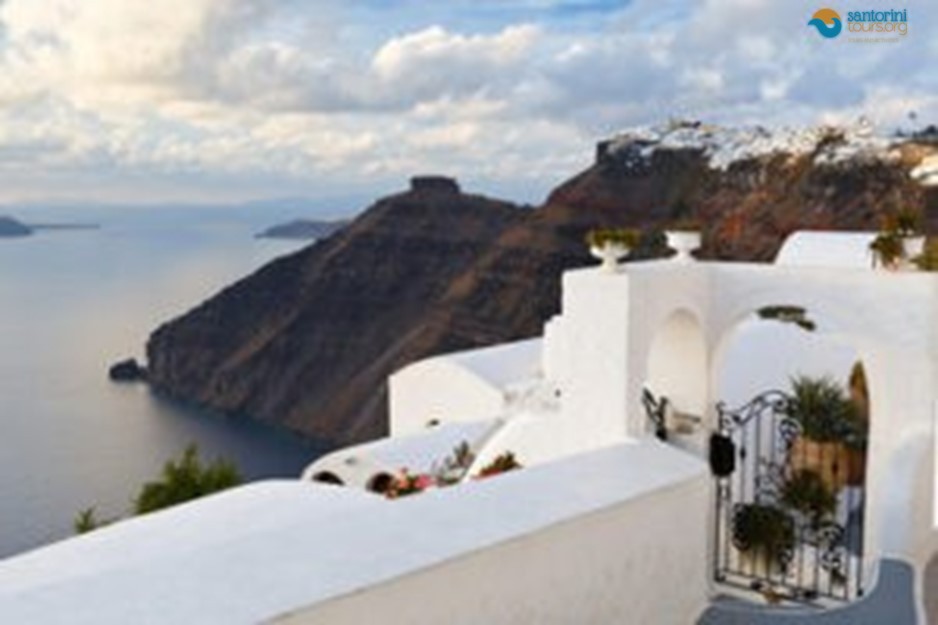
The Island These Collections Come From
Every One of the Santorini Museums Compared
| Museum | Where | Time needed | What is in it | Verdict |
|---|---|---|---|---|
| Museum of Prehistoric Thera | Fira | 1 hour | The frescoes and finds from Akrotiri | Essential, and see it before the site |
| Archaeological Museum of Thera | Fira | 20 to 30 minutes | The later classical and Roman island | Worth it if you are already in Fira |
| Museum of Minerals and Fossils | Perissa | 30 minutes | Volcanic geology and local fossils | Good for a wet afternoon or curious children |
| Wine Museum, Koutsoyannopoulos | Vothonas | 1 hour | An underground cave winery with a tasting | Eccentric, indoor and genuinely fun |
| Naval Maritime Museum | Oia | 45 minutes | The island shipping history nobody expects | A good hour when the wind is up |
| Folklore Museum | Fira, Kontochori | 45 minutes | A restored 19th century cave house | The most human of the Santorini museums |
| Lost Atlantis Experience | Fira | 45 minutes | A modern multimedia take on the eruption | A show rather than a museum; fine with children |
| Bellonio Cultural Centre | Fira | 30 minutes | Library, exhibitions and local archives | Free and quiet |
| Art Space | Exo Gonia | 1 hour | Contemporary art inside a working cave winery | The most atmospheric room on the island |
| Akrotiri site itself | Akrotiri | 1 to 1.5 hours | Not a museum, the town the museums explain | The single best paid visit on Santorini |
Ten entries, of which two are essential and the rest are optional. That is an honest summary of the Santorini museums, and it is more than most islands this size can offer.
Museum of Prehistoric Thera
Where. In Fira, a short walk from the main square, in an unremarkable modern building.
What is inside. Everything lifted out of Akrotiri: wall paintings, painted pottery, stone vessels, tools, and a gold ibex figurine found in a box under a floor.
The frescoes. The Blue Monkeys and the famous fisherman among them, painted three and a half thousand years ago and still holding their colour. Among all the Santorini museums this is the room that justifies the whole page.
How long. An hour, comfortably.
When. Midday, because it is air conditioned and the rim is unpleasant at that hour.
Crucially, go before Akrotiri. The site is a town with its contents removed; this is where the contents are. Visiting in that order turns a walk through old walls into something considerably more interesting. Our Akrotiri guide explains the site itself.
Practicalities. Modestly ticketed, sometimes on a combined ticket with the archaeological site and Ancient Thira. Photography rules vary; ask at the desk.
Archaeological Museum of Thera
Where. Also in Fira, near the cable car station.
What is inside. The later island: Geometric, Archaic, Classical, Hellenistic and Roman material from Ancient Thira and the cemeteries, including sculpture and inscriptions.
Why it is quieter. Because the Bronze Age material next door is more spectacular, which is unfair but true.
How long. Twenty to thirty minutes.
Worth it if you are climbing to Ancient Thira, because it gives that ruin its context.
The Wine Museum at Vothonas
Where. Koutsoyannopoulos winery, in the middle of the island, eight metres underground in a natural cave tunnel.
What it is. A walk-through history of Santorini winemaking with tableaux, old presses and equipment, followed by a tasting.
Why it works. It is genuinely eccentric, entirely indoors, and it ends with wine. Of all the Santorini museums this is the one that suits a hot afternoon or a wet one best.
Children generally enjoy the cave and the models.
How long. An hour with the tasting.
Pair it with a proper estate visit; our wine tour covers the working wineries.
The Smaller Santorini Museums
Naval Maritime Museum, Oia. In a restored captain’s mansion, covering the era when this island had one of the largest merchant fleets in Greece. Figureheads, instruments, photographs and ship models. A good forty-five minutes, and the best thing to do in Oia when the wind is up.
Folklore Museum, Kontochori. A cave house preserved as it was in 1861, with the workshops, the winery and the chapel attached. The most human of the Santorini museums and the one that explains how people actually lived on the cliff.
Museum of Minerals and Fossils, Perissa. Volcanic rock, minerals and fossils including palm trees from before the eruption. Thirty minutes, and better than it sounds for anyone curious about the geology.
Art Space, Exo Gonia. Contemporary Greek art shown inside a nineteenth century cave winery, with the works lit against the rock. Part gallery, part cellar, and the most atmospheric interior on the island.
Lost Atlantis Experience, Fira. A multimedia show about the eruption rather than a museum. Fine with children, and not a substitute for the real collections.
Bellonio Cultural Centre, Fira. Library, archive and changing exhibitions. Free, quiet, and used by residents.
How to Fit the Santorini Museums Into a Trip
On a three night trip. One museum, and make it the Museum of Prehistoric Thera, on the morning you visit Akrotiri.
On a week. Add the Wine Museum and Art Space, both inland, both indoors.
On a rainy or very windy day. This is when the Santorini museums earn their place: three of them are underground or fully enclosed, and the caldera is miserable in a northerly.
In August. Use them for the eleven-to-four window when the rim is unbearable.
In winter. Check hours before travelling, because most run a reduced timetable. See our winter guide.
With children. The Wine Museum cave and the fossils at Perissa work best; the fresco galleries need some interest to hold them.
With a car. Vothonas, Exo Gonia and Perissa are all a few minutes apart in the middle of the island.
Without one. Fira holds four of them within a ten minute walk, which is the practical answer for most visitors.
Santorini Museums: Tickets, Hours and Practicalities
Prices are low. The state museums cost a few euro, and combined tickets covering the Prehistoric Thera museum, the archaeological site at Akrotiri and Ancient Thira are usually available and better value than separate entries.
Hours change by season. Summer hours are long, winter hours short, and Mondays are a common closing day at state museums.
Check before you travel across the island for the private collections, which set their own hours.
Free days exist at state museums on certain public dates; ask locally.
Cards are accepted at the larger ones and not always at the smaller.
Accessibility varies. The Fira museums are largely step-free; the cave interiors are not. Our accessibility guide covers the wider picture.
Photography. Usually permitted without flash, with exceptions. Ask at the desk.
Santorini Museums: Common Questions
Which museum in Santorini is the best?
The Museum of Prehistoric Thera in Fira, which holds the frescoes and finds excavated at Akrotiri.
Should I visit the museum before or after Akrotiri?
Before. The site is the town with its contents removed, and the museum is where those contents are.
Our things to do guide sets both in the wider list.
How many museums are there on Santorini?
Around eight to ten depending on what you count, including two state museums, several private collections and a gallery.
Are the Santorini museums expensive?
No. The state museums cost a few euro and combined tickets with the archaeological sites are better value again.
Are they open in winter?
Mostly yes, on reduced hours, and some private ones close entirely. Check before crossing the island.
Are they good for children?
The Wine Museum cave and the fossil collection at Perissa work best. The fresco galleries suit older children.
Is the Lost Atlantis Experience a museum?
It is a multimedia show rather than a collection. Enjoyable, and not a substitute for the real material.
Which of the Santorini museums should I see if I only have an hour?
The Museum of Prehistoric Thera, without hesitation.
Santorini Museums: Key Points
- The Museum of Prehistoric Thera is the best of the Santorini museums by a wide margin.
- See it before Akrotiri, not after.
- Four collections sit within a ten minute walk in Fira.
- Combined tickets with the archaeological sites are better value than single entries.
- The Wine Museum at Vothonas is underground and ends with a tasting.
- Art Space at Exo Gonia is the most atmospheric interior on the island.
- The Naval Maritime Museum is the best hour in Oia on a windy day.
- Most Santorini museums run reduced winter hours and some close on Mondays.
- They are the obvious plan for the hottest hours of an August day.
- Entry prices are low by any European standard.
A Half Day of Santorini Museums and Sites
The sequence we drive most often, and the one that makes the material make sense.
09:00 Museum of Prehistoric Thera, Fira. An hour with the frescoes while the town is still quiet.
10:15 Archaeological Museum, twenty minutes, if the later island interests you.
11:00 Drive south to Akrotiri. Twenty minutes.
11:20 The archaeological site. Roofed, shaded and now populated in your head by everything you saw at nine.
13:00 Lunch inland, at Megalochori or Emporio.
14:30 The Wine Museum at Vothonas, underground and cool through the worst of the heat.
16:00 Art Space at Exo Gonia, five minutes away.
That is the whole cultural half of Santorini in a day, and our historical tour follows much the same line.
Quick Answers on Santorini Museums
The one to see? The Museum of Prehistoric Thera, the best of the Santorini museums.
Where is it? Fira, a short walk from the main square.
Before or after Akrotiri? Before, always.
Cost? A few euro at the state Santorini museums, less on a combined ticket.
Best in bad weather? The Wine Museum, underground at Vothonas.
Best in Oia? The Naval Maritime Museum.
Most atmospheric? Art Space at Exo Gonia.
Best for children? The wine cave and the fossils at Perissa.
Open Mondays? Often not at the state Santorini museums; check first.
How many can you do in a day? Three comfortably, plus Akrotiri.
Worth a whole day? Half a day of Santorini museums, paired with the archaeological site at Akrotiri.
Why These Collections Matter
Most island museums are collections of local curiosities. The Santorini museums are not, because of one accident of geology.
The eruption buried a town whole. Ash sealed Akrotiri and preserved its walls, its pots and its paintings for three and a half thousand years.
Nothing was looted afterwards, because nobody knew it was there.
What came out is one of the most complete pictures we have of Bronze Age Aegean life: how people built, drank, farmed, traded and decorated their walls.
Where it went. Some to Athens, and a great deal to the museum in Fira, which is why an hour there is not a wet-weather fallback but one of the genuinely important rooms in Greece.
The rest of the island’s story then runs through the other Santorini museums: classical Thira, the merchant fleets of the nineteenth century, the vines, and the cave houses people lived in until living memory.
Booking With Us
We run the sites and the collections together, in the order that makes them worth the ticket, with a driver who knows which rooms to linger in. Per vehicle rather than per person, no deposit, free cancellation.
Tours
- full day tour
- half day tour
- north part and Oia tour
- south part and Akrotiri tour
- sightseeing tour
- historical tour
- wine tour
- food experience
- sunset tour
- shore excursion
- small group tour
- black sand beach tour
- horse riding tour
- custom tour
- coach tours
Transfers
- island transfers
- VIP chauffeur service
- transfer to Oia and Finikia
- transfer to Fira and the villages
- choosing a private transfer
Book directly
- Full Day Tour
- Half Day Tour
- North Part and Oia Tour
- South Part and Akrotiri Tour
- Sightseeing Tour
- Small Group Tour
- Wine Tour
- Food Experience
- Historical Tour
- Sunset Tour
- Shore Excursion
- Black Sand Beach Tour
- Horse Riding Tour
- Personalised Tour
Further reading
- Akrotiri
- Things to do in Santorini
- Cultural experiences
- A three day itinerary
- Santorini in winter
- The volcano tour
- Where to stay in Santorini
- Every village on the island
- The complete travel guide
- The best time to visit
- How many days you need
- The public bus explained
- Taxis on Santorini
- Should you hire a car?
- Santorini airport
- Santorini to Mykonos
- Crete to Santorini
- Santorini on a budget
- Santorini hiking
- The best beaches
- Santorini for seniors
- Family tours
More from this site
- All tours and prices
- About Santorini Impressive Tours
- Photo gallery
- Pictures from our private tours
- Useful links for travellers
- Full site map
- All our Santorini articles
- Terms of use
- Privacy policy
Tell us what interests you and we will build the day around it.
