
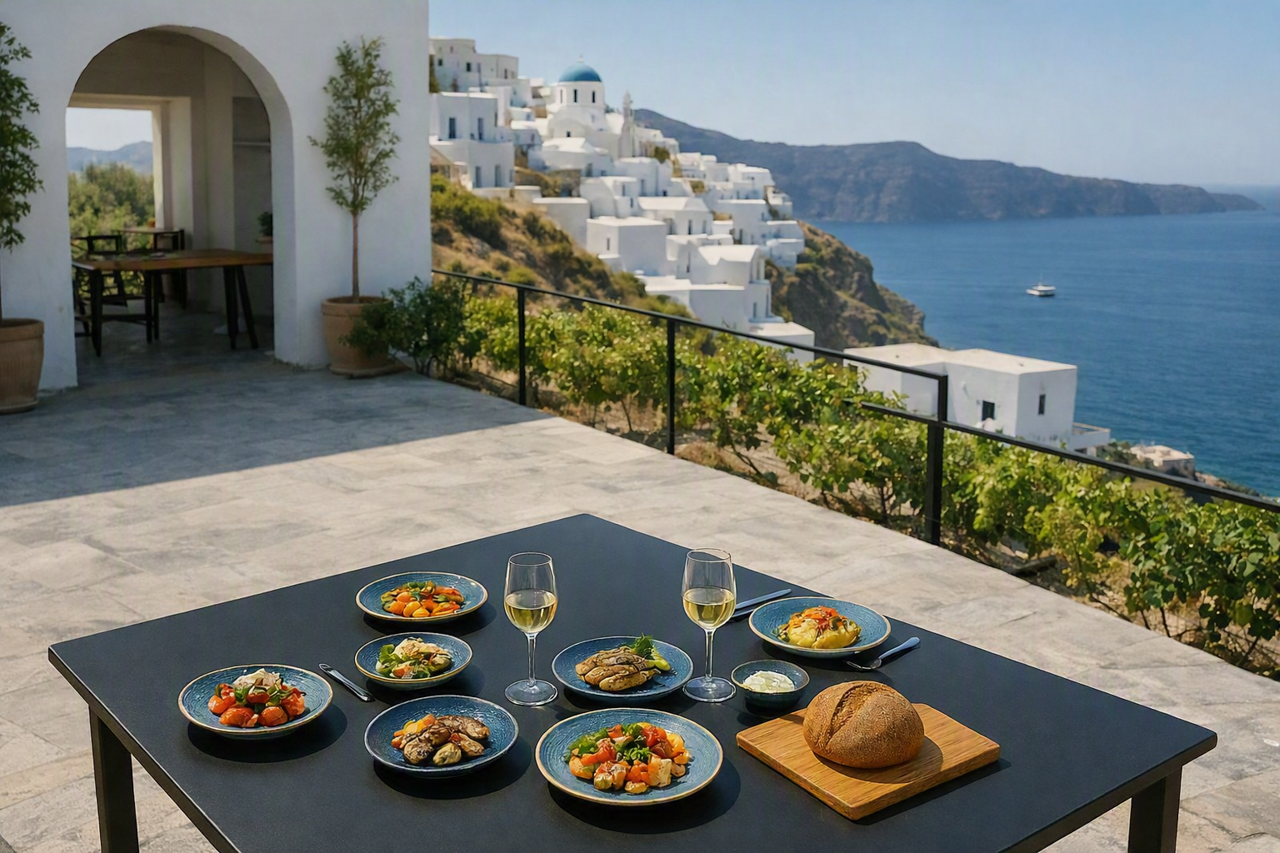
Private Santorini Food Tours: Prices, Stops & How to Choose the Best One
Discover private Santorini food tours with prices, top stops, and expert tips to choose the best culinary experience for your visit.
Private Santorini Food Tours: Prices, Best Stops, And How To Choose
A private Santorini food tour can turn a beautiful island visit into a far more memorable one. Instead of simply photographing the caldera and moving from one famous viewpoint to the next, we can taste the ingredients, recipes, and local traditions that make Santorini distinct. We might visit a family-run taverna in a quiet village, sample volcanic wine in a hillside cellar, or learn why the island’s tiny tomatoes taste so different from those grown elsewhere.
The challenge is choosing the right experience. Prices vary considerably, itineraries can focus on wine or full meals, and a Santorini tour advertised as “private” may still differ in group size, transport, and customization. In this guide, we’ll explain what private Santorini tours usually cost, which stops and dishes are worth seeking out, how the main areas compare, and what to ask before booking. Whether we’re planning a romantic day, a family outing, or one of several Santorini private tours, these details help us spend wisely.
What Makes A Private Santorini Food Tour Worth It?
The biggest advantage is flexibility. On a shared food tour, we generally follow a fixed route and schedule. A private tour lets us spend more time at the places that interest us, skip stops that don’t suit us, and adjust the pace around our group. That matters in Santorini, where a leisurely tasting can easily become rushed if we’re trying to keep up with strangers.
A good guide also adds context that we won’t get from a restaurant menu. Santorini’s food is shaped by its volcanic soil, intense sun, limited rainfall, strong winds, and long-standing preservation methods. We can taste a dish such as fava and understand why yellow split peas became important on an island where growing conditions are challenging. We can visit a winery and learn why vines are trained in low, basket-shaped coils to protect grapes from the wind.
Private tours are especially valuable for first-time visitors who want an efficient introduction to local cuisine. Rather than researching restaurants and driving between villages ourselves, we have a knowledgeable local handling the route. Guides can often recommend additional tavernas, bakeries, wineries, and markets for the rest of our stay.
There’s also a practical benefit: food tours can reveal a side of Santorini beyond Oia and Fira. The caldera views are spectacular, but villages such as Pyrgos, Megalochori, and Emporio offer a more grounded look at island life. We’re not only paying for food: we’re paying for access, interpretation, and a thoughtfully connected experience.
Typical Prices For Private Santorini Food Tours
We should generally expect private Santorini food tours to cost about €100 to €180 per person for a shorter experience of roughly three to four hours, assuming a small private group. Tours with extensive tastings, restaurant meals, premium wines, or private transportation commonly fall between €180 and €300 per person. A full-day culinary itinerary may exceed €300 per person, particularly when it includes high-end wineries, a private driver, or a chef-led meal.
The final price depends on several factors. Group size is one of the most important. A private tour for two people will normally cost more per person than the same vehicle and guide divided among six guests. The season matters, too: July and August are typically the busiest and most expensive months, while spring and autumn may offer better availability and value.
Location also affects pricing. A walking tour based in Fira may cost less than an island-wide itinerary requiring a driver. Wine-focused tours often cost more because winery tastings can include multiple premium labels, cellar visits, and food pairings. Hotel pickup, sunset timing, entrance fees, and a sit-down meal may either be included or charged separately.
We should treat unusually low prices carefully. A budget tour isn’t automatically poor, but it may include fewer tastings, smaller portions, self-guided transfers, or stops designed mainly for tourists. Comparing the inclusions is more useful than comparing the headline price alone.
What Your Tour Price Usually Includes
A reputable private food tour commonly includes a licensed or experienced local guide, transportation when the itinerary covers multiple villages, and a stated number of tastings. These may include coffee, pastries, cheese, cured meats, local snacks, wine, beer, or a complete meal. We should check whether portions are intended as samples or substantial food: this makes a major difference when planning lunch or dinner afterward.
Many tours include hotel or cruise-port pickup within a defined area, but not all do. Pickup from Oia, the airport, or the port may require an additional fee. Winery admission and tasting fees are sometimes included, while premium wines may be optional upgrades.
Before booking, we should look for a clear list of exclusions. Common extras include gratuities, additional drinks, premium menu items, transfers outside the standard zone, and entrance fees for attractions unrelated to the food experience. A transparent operator will explain these details without making us hunt through fine print.
The Best Food Stops To Look For In Santorini
The best private Santorini food tours combine several types of stops rather than visiting three similar tasting rooms. We might begin at a bakery or café, continue to a village taverna, visit a winery, and finish with a dessert or sunset drink. That variety helps us understand how food fits into everyday island culture.
Village tavernas are essential. In places such as Pyrgos, Megalochori, or Akrotiri, we may find menus built around seasonal vegetables, grilled meats, seafood, and recipes prepared in the home-style tradition. A guide can steer us toward restaurants that use local ingredients rather than simply choosing the most visible caldera-view dining room.
Wineries are another important stop. Santorini is internationally known for Assyrtiko, a crisp white wine with pronounced acidity and mineral character. Vinsanto, a naturally sweet dessert wine made from sun-dried grapes, is also closely associated with the island. A private itinerary may allow us to compare several styles instead of treating a wine tour as a quick photo opportunity.
We should also look for producers of local ingredients. A small farm, family kitchen, olive-oil tasting, or food workshop can be more personal than a large commercial attraction. Some itineraries include a market visit, although Santorini’s market options vary by village and day. We’ll want to confirm exactly what “market visit” means before assuming it involves a traditional farmers’ market.
Traditional Foods And Drinks You Should Try
Fava me koukofava is one of Santorini’s signature foods: a smooth purée made from yellow split peas, usually finished with olive oil, onions, capers, or herbs. It’s simple, filling, and a useful example of how island cooking makes the most of hardy crops.
Tomatokeftedes, or tomato fritters, are another must-try. Santorini tomatoes are small and intensely flavored, and the fritters are commonly mixed with herbs and onions before being fried. Recipes differ from one kitchen to another, which is part of the fun.
We should also seek white eggplant, a naturally sweet local variety, along with capers and caper leaves, which may appear in salads, sauces, or meze. Chloro, a fresh local cheese, can be served with bread or incorporated into other dishes. Grilled seafood, lamb, pork, and slow-cooked dishes round out many traditional menus.
For drinks, Assyrtiko is the obvious starting point, but we can ask about Aidani and Athiri, two other indigenous white grape varieties. Vinsanto is worth sampling after a meal, while ouzo, tsikoudia, and local beer may appear depending on the itinerary. We don’t need to try everything: a thoughtful guide will help us choose a balanced progression.
Popular Santorini Areas For Private Food Tours
Fira is the most convenient base for a walking-focused tour. It has restaurants, cafés, wine bars, and excellent views, and it’s easy to reach from many hotels. The trade-off is that some venues are heavily geared toward visitors, so we should choose an operator with strong local relationships. Fira works particularly well when we have limited time or don’t want to arrange a vehicle.
Oia offers famous scenery and an appealing atmosphere, but prices are often higher. Food tours here may emphasize sunset views, wine pairings, and carefully selected restaurants. Oia is a good choice for a romantic private experience, though we should make sure the itinerary includes more than scenic terraces and tourist-oriented tasting plates.
Pyrgos and Megalochori provide a quieter village setting. Their narrow lanes, old wineries, churches, and traditional architecture create a more intimate backdrop for food and wine. These areas are often ideal for travelers who want history and local character alongside their tastings.
Akrotiri is a strong option for combining food with the island’s archaeological and agricultural heritage. It’s close to several wineries and beaches, and a tour may include local products grown in the southern part of the island. We’ll need to check whether archaeological-site admission is included if that is part of the plan.
An island-wide itinerary can connect several areas in one day, but transport becomes more important. We should confirm the vehicle type, driving time, and whether the route is realistic during peak summer traffic. A shorter route with better stops is often more enjoyable than trying to cover every corner of Santorini.
How Private Food Tours Compare With Other Santorini Tours
Private food tours occupy a useful middle ground between independent sightseeing and fully packaged Santorini Tours. We get structure and local expertise without surrendering control of the day. Compared with a shared food tour, the private option usually costs more, but it gives us a quieter pace, more direct conversation with the guide, and greater control over food preferences.
A standard sightseeing tour may visit Oia, the caldera, a monastery, or an archaeological site. That type of itinerary is efficient for seeing landmarks, but food may be incidental. A private culinary tour gives gastronomy equal billing and can still include scenic villages or cultural stops when planned well.
Wine tours are narrower but can be better for serious wine enthusiasts. They typically spend more time at cellars and may include expert-led tastings. A broader food tour is preferable if our group wants a mixture of dishes, local history, and wine rather than several vineyard visits.
Cooking classes offer hands-on participation, which is ideal if we want to recreate Greek recipes at home. But, they usually involve fewer locations and may not provide the same overview of the island. Beach excursions and boat tours offer a completely different experience: wonderful for swimming and scenery, but not a substitute for a land-based culinary route.
For many travelers, the best plan is not choosing only one type of activity. We might pair one private food tour with a boat day or a sightseeing excursion. That gives us both the big views and the slower, flavorful details that make a trip feel personal.
How To Choose The Best Private Tour For Your Trip
We should begin with our priorities. Are we most interested in wine, traditional dishes, village history, photography, or a relaxed meal? Tour descriptions can sound similar, but the actual experience changes substantially depending on that focus. A wine-centered itinerary may not satisfy children or guests who rarely drink, while a restaurant-heavy tour may disappoint travelers hoping to visit producers.
Next, we should examine the itinerary rather than relying on phrases such as “authentic” or “off the beaten path.” The operator should name the general areas, types of venues, approximate duration, and number of tastings. We don’t necessarily need every stop revealed, but we do need enough information to judge whether the tour matches our expectations.
Reviews are most useful when they mention specific details: portion sizes, guide knowledge, punctuality, vehicle comfort, dietary accommodations, and whether the advertised stops were actually open. Recent reviews matter because restaurants and wineries can change policies from one season to the next.
Group composition matters as well. A private tour for a couple can be romantic and flexible: a multigenerational family may need shorter walks, restroom access, and nonalcoholic choices. If we’re traveling with children, we should ask whether tastings can be adapted without making them feel like an afterthought.
Finally, compare cancellation terms and communication quality. A professional operator answers questions clearly, identifies the pickup point, and explains what happens if weather, traffic, or a venue closure changes the route. That level of organization is often a better predictor of a smooth day than a polished promotional photograph.
Questions To Ask Before Booking
Before we pay, we should ask:
- Is the tour fully private, and what is the maximum group size?
- How many food and drink tastings are included?
- Is this enough food to replace lunch or dinner?
- Are transportation, hotel pickup, winery fees, and taxes included?
- Which villages, restaurants, farms, or wineries will we visit?
- Can the itinerary accommodate vegetarian, vegan, gluten-free, halal, kosher, or allergy-related needs?
- Are children welcome, and are nonalcoholic drinks available?
- How much walking, standing, and stair climbing is involved?
- What happens if a venue is closed or the weather changes?
- What are the cancellation and refund policies?
The answers help us distinguish a genuinely customized experience from a standard tour sold under a private label.
Practical Tips For Timing, Transport, And Dietary Needs
Timing can make or break a food tour. In summer, an early start avoids the hottest part of the day and often means quieter streets. An afternoon tour can work well for wine tasting and sunset, but we should expect heavier traffic and confirm that the final stop doesn’t depend on a very narrow viewing window. We also shouldn’t schedule a demanding tour immediately before a flight or ferry.
If we’re arriving by cruise ship, we need to allow extra time for tendering from the ship to shore. Pickup instructions should be specific: “Fira port” and “Fira town” are not interchangeable. Hotel guests should provide the exact property name and confirm whether the vehicle can reach it. In narrow villages, the driver may meet us at a designated point rather than the hotel door.
Comfortable shoes are essential. Santorini has uneven stone paths, stairs, slopes, and polished surfaces that can become slippery. Light layers, sun protection, and water are sensible even when the itinerary centers on food. We should pace wine tastings, particularly in the heat, and never feel pressured to finish every pour.
Discuss dietary needs before booking, not at the first restaurant. Greek cuisine includes many naturally vegetarian dishes, but sauces, cheese, stock, and shared fryers can still create problems. We should describe allergies precisely and ask whether the guide can communicate them in Greek. Severe allergies may require a more cautious plan, including confirmation directly from each venue.
The right private Santorini food tour isn’t necessarily the longest or most expensive one. It’s the experience that fits our appetite, schedule, mobility, interests, and comfort level. When the route is well chosen, we leave with more than a full table: we understand why Santorini tastes the way it does, and we have a few favorite places to return to.
Frequently Asked Questions About Private Santorini Food Tours
What is a private Santorini food tour and why is it worth it?
A private Santorini food tour is a customizable culinary experience allowing guests to explore local dishes, wines, and culture at their own pace with a knowledgeable guide, making it more personal and flexible than shared tours.
How much do private Santorini food tours typically cost?
Prices generally range from €100 to €180 per person for shorter 3-4 hour tours, and €180 to over €300 for full-day or premium experiences including private transport, extensive tastings, or meals.
Which local foods and drinks should I expect to try on a Santorini private food tour?
Typical tastings include Santorini specialties like fava purée, tomatokeftedes (tomato fritters), white eggplant, local cheeses, grilled seafood, and wines such as Assyrtiko and Vinsanto dessert wine.
What factors should I consider when choosing the best private food tour in Santorini?
Consider your interests (wine, traditional dishes, village history), group composition, itinerary details, dietary accommodations, and whether transport, tastings, and pickups are included.
Can private Santorini food tours accommodate dietary restrictions and families with children?
Yes, reputable tours can adapt menus for vegetarian, vegan, gluten-free, halal, kosher, and allergy needs, and many welcome children with options for nonalcoholic drinks and appropriate pacing.
How do private food tours in Santorini compare to other local tours like sightseeing or cooking classes?
Private food tours focus on local gastronomy and culture with personalized pacing, whereas sightseeing tours emphasize landmarks, and cooking classes offer hands-on recipe learning but fewer locations.
Getting here and getting around
- the airport
- the bus network
- taxis
- car rental
- ATV rental
- the cruise port
- ferry tickets
- Athens to Santorini
- Crete to Santorini
- Santorini to Mykonos
- Santorini to Naxos
- Santorini to Paros
- Santorini to Ios
- Santorini to Milos
- Santorini to Folegandros
- Santorini vs Mykonos
- Santorini vs Rhodes
- Santorini vs Crete
Our private tours
- full day private tour
- famous sights tour
- sightseeing tour
- north part and Oia tour
- south part and Akrotiri tour
- historical tour
- wine tour
- food experience
- sunset tour
- shore excursion
- small group tour
- caldera tour with local snacks
- horse riding tour
- personalised tour
- coach tours
Book direct
- Full Day Tour
- Famous Sights Tour
- Sightseeing Tour
- North Part Tour
- South Part Tour
- Historical Tour
- Wine Tour
- Food Experience
- Sunset Tour
- Shore Excursion
- Small Group Tour
- Caldera Tour
- Horse Riding Tour
- Personalised Tour